Pickleball Serve Rules — Everything You Need to Know in 2026
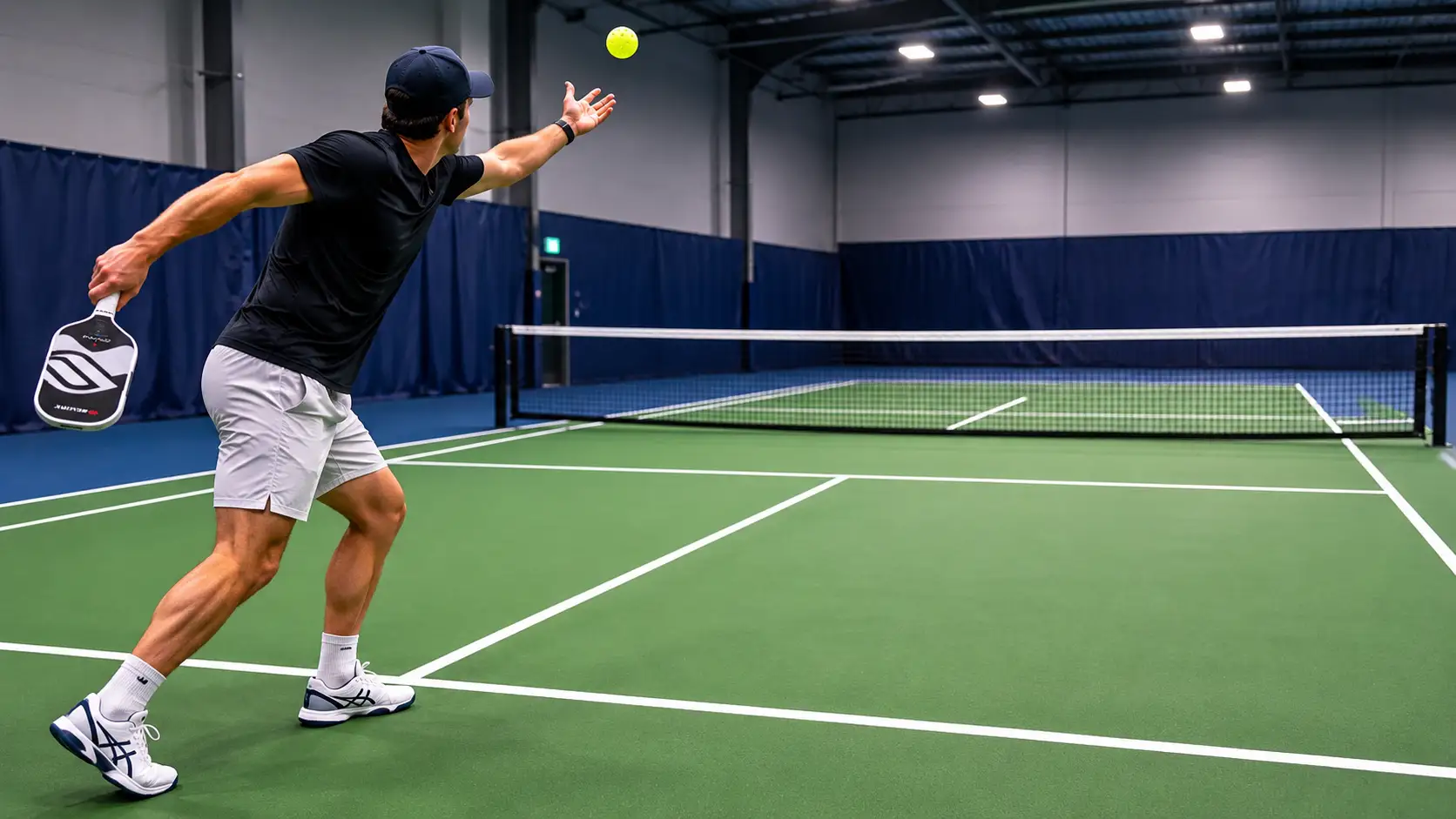
The serve is the one shot every player hits in every game — and yet it's one of the most misunderstood parts of pickleball. Get it wrong and you lose the point before the rally even starts.
Here's everything you need to know about legal pickleball serves in 2026, written for UK club players.
The Two Types of Legal Serve
In 2026 there are two completely legal ways to serve in pickleball. Understanding the difference matters because the rules that apply to each are different.
The Volley Serve
The volley serve is the traditional pickleball serve — you toss or release the ball and strike it before it bounces. Three rules apply strictly:
- The arm must be moving upward when the ball is struck. A sidearm or downward swing is a fault.
- Contact must be below the waist — specifically below the navel.
- The paddle head must be below the wrist at the moment of contact.
The 2026 rulebook added the word "clearly" to all three of these requirements. Previously, referees had to give the benefit of the doubt on borderline serves. Now, if a serve doesn't clearly meet all three conditions, a referee can call it a fault. At club level in Nottinghamshire this rarely comes up — but in tournament play it matters.
Volley serve — three requirements for a legal contact point
The Drop Serve
The drop serve was introduced as a permanent option and it's significantly simpler. You drop the ball and let it bounce, then strike it after the bounce.
The important distinction: none of the three volley serve restrictions apply to the drop serve. You can strike the ball with any motion — sidearm, downward, sliced — as long as the ball bounced first.
The only rule is that you must drop the ball naturally. You cannot throw it downward to create a higher bounce, and the release must be visible to the receiver.
Most beginners find the drop serve easier to learn and completely legal at all levels including tournament play.
Foot Position Rules
Where you stand matters as much as how you swing. At the moment the ball is struck:
- At least one foot must be touching the ground behind the baseline at the moment of contact
- Neither foot may touch the court lines or the inside of the court at the moment of contact
- Neither foot may touch outside the imaginary extension of the sideline or centreline
In plain English — stand behind the baseline and don't step over the side or centre lines when you serve. A foot fault is a fault even if the serve itself is perfect.
Where the Serve Must Land
The serve must land in the diagonally opposite service box — the box cross-court from where you're serving. The ball must clear the net and land beyond the kitchen line.
Critically — a serve that lands on the kitchen line is a fault, even though the kitchen line counts as in during regular play. The non-volley zone line is out on a serve.
The serve can land on any other line in the service box and it's in.
Top-down view — serve must clear the kitchen and land in the diagonally opposite service box
The Visible Release Rule
When using a volley serve, the release of the ball must be visible to the receiver. If the receiver cannot see the release — perhaps because of body position or the server's hand — the receiver can call for a replay, but only before they return the serve. Once the return is hit, the right to call a replay is gone.
Common Serve Faults at Club Level
These are the mistakes most often seen at Nottinghamshire club sessions:
Striking above the waist — the most common fault on volley serves. When players try to add pace, the contact point creeps up. Keep it below the navel.
Wrong service box — serving to the correct box sounds simple but players get confused after a side-out, particularly in doubles when server positions change.
Foot on the baseline — many players naturally step forward as they serve. The foot must be behind the line, not on it.
Serving before the receiver is ready — the receiver must be ready before the server can serve. If the receiver signals they're not ready and the server serves anyway, it's a fault.
Landing in the kitchen — aiming for depth and hitting the net tape is one thing, but serves that drop short into the kitchen are straightforward faults.
The 2026 Rule Changes That Affect Serving
Two changes in the 2026 rulebook are worth knowing about:
The "clearly" requirement — as mentioned, the word "clearly" now applies to all three volley serve conditions. This makes enforcement more straightforward in tournament play and removes grey areas that previously caused disputes.
The Rally Scoring freeze rule removed — if you play in clubs or tournaments using provisional Rally Scoring formats, the freeze rule has been eliminated for 2026. Previously, a leading team at match point could only score the winning point on their own serve. Now the rally winner can close out the match on a return of serve. Note: traditional side-out scoring — the 0-0-2 format used at most Nottinghamshire clubs — is unchanged. You still must be serving to score in normal club games.
Serving in Doubles — The 0-0-2 Start
One serving rule that confuses almost every beginner in doubles is the 0-0-2 start. At the beginning of each game, only the second server on the first serving team gets to serve before a side-out. This means the score starts at 0-0-2 rather than 0-0-1.
After this initial rotation, both players on each team serve before the serve passes to the other team — unless a fault ends the serve early.
If you haven't already read our full scoring guide, it covers this in detail: How Pickleball Scoring Works
Serving Strategy for Club Players
Legal is the baseline — but a good serve does more than just get the ball in.
Serve deep. A serve that lands close to the baseline pushes your opponent back and gives you more time to get into position. Most recreational players at Nottinghamshire clubs serve short without realising it.
Vary the target. Serving repeatedly to the same spot lets opponents settle into a rhythm. Mix between the backhand corner, the body, and the wide forehand to create uncertainty.
Prioritise consistency over power. At club level a double fault costs you the serve. A reliable serve that lands in play every time is worth far more than an occasional powerful serve that faults regularly.
Playing competitively in Nottinghamshire? Check our Player Rankings page to see where local players stand by DUPR rating.
New to the game? Our Beginners Guide covers everything you need before your first session at a Nottinghamshire club.
Stay in the loop.
New courts, sessions and Notts pickleball news — delivered when it matters. No spam.
No group chats. No spam. Unsubscribe anytime.