Playing Pickleball Could Be as Good for Your Mind as Your Body — Here's the Science
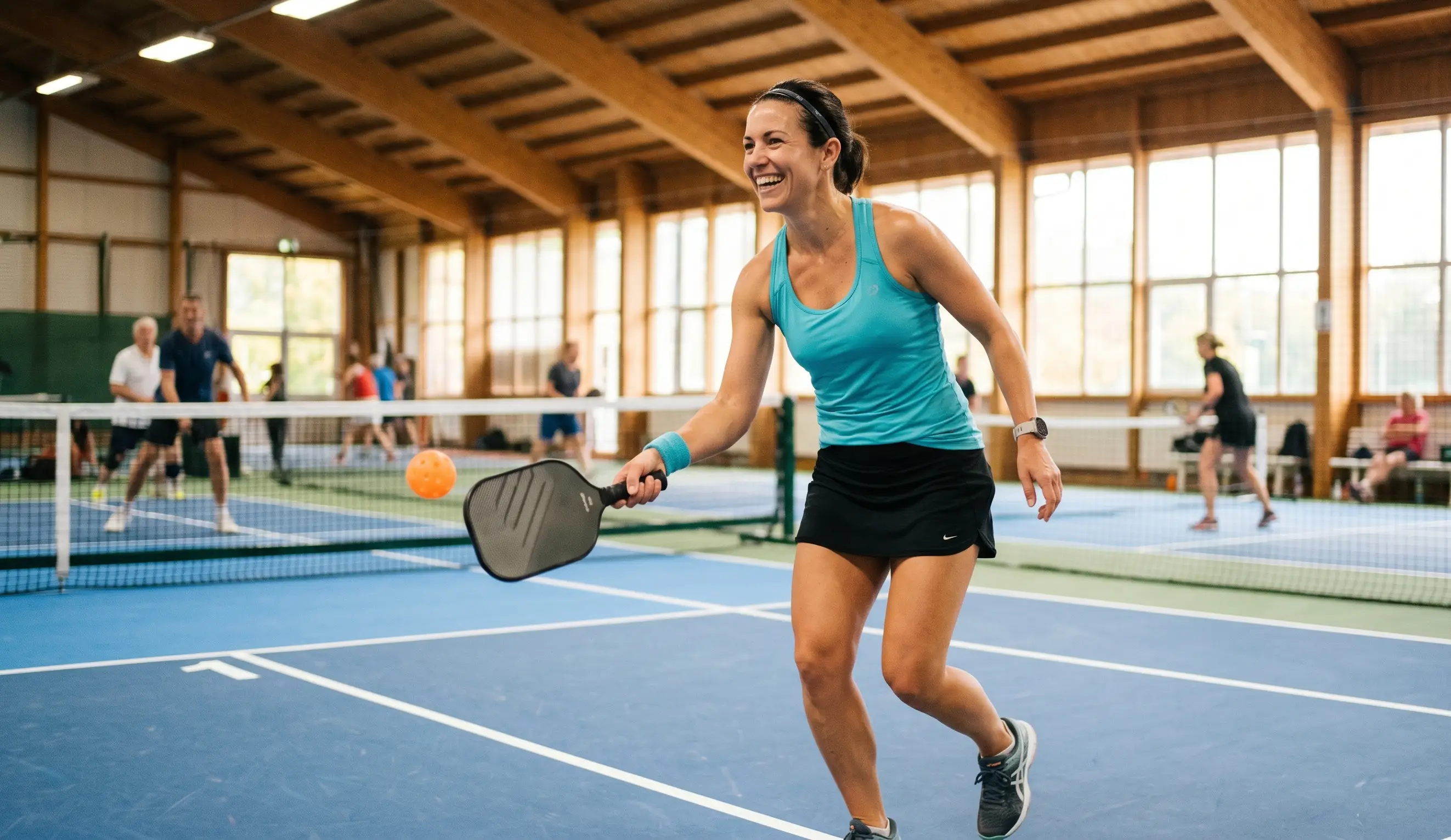
Most people who try pickleball say the same thing: it just makes them feel good. Happy, energised, less stressed. For a long time that was just anecdote. Now there's serious science behind it — from one of the largest datasets of pickleball activity ever collected.
What Apple Actually Found
The Apple Heart and Movement Study — a collaboration between Apple, Brigham and Women's Hospital, and the American Heart Association — tracked the workout and health data of over 200,000 Apple Watch users across the United States who consented to share their data.
The researchers analysed more than 250,000 pickleball and tennis workouts recorded on Apple Watch, then cross-referenced that data with an optional mental health survey using the Patient Health Questionnaire-2 — a validated clinical tool used to screen for depression.
The result was striking. Frequent pickleball players had 60.1% lower odds of reporting symptoms consistent with depressed mood compared to the general pool of study participants. For context, frequent tennis players showed 51.3% lower odds — impressive, but still below pickleball.
That's not a small effect. That's a significant, measurable difference in mental health outcomes across a massive dataset.
Why Pickleball Specifically?
The researchers are careful to note this is an observational study — it shows correlation, not proof that pickleball directly causes better mental health. But the principal investigator has a clear view on why the association exists.
Dr. Calum MacRae, a cardiologist and Professor of Medicine at Harvard Medical School, said the potential reasons could include the sport's impact on hormones, neuromuscular coordination and resilience.
Three factors stand out when you think about what makes pickleball different from, say, going for a run:
It's social by nature. You need at least one other person to play, and most sessions involve rotating partners and opponents. That consistent social interaction — something increasingly rare in modern life — is one of the most well-established protective factors against depression and loneliness.
It requires genuine mental engagement. Unlike walking or cycling, pickleball demands constant attention. Where is the ball? Where are your opponents? Where should you be positioned? That cognitive demand keeps your mind fully present in a way that passive exercise doesn't.
It's accessible enough to do consistently. Tennis requires more fitness and skill. Running can feel like a chore. Pickleball hits a sweet spot — challenging enough to be engaging, accessible enough that almost anyone can play and improve. That makes regular participation far more likely.
The Physical Benefits Are Real Too
The mental health finding is the headline, but the cardiovascular data is equally encouraging.
Pickleball sessions in the study averaged 90 minutes — nine minutes longer than tennis sessions on average. Players reached a peak heart rate of around 143 beats per minute, which puts them within 70% of their estimated maximum heart rate. That's the zone associated with meaningful cardiovascular benefit.
It's less intense than tennis — tennis players averaged 152 beats per minute peak and spent more time in higher-intensity heart rate zones. But for most people, especially those returning to exercise or managing joint issues, pickleball's moderate intensity is actually an advantage. You can sustain it for longer, play more frequently, and are less likely to get injured.
The study also found that pickleball crossed age groups effectively — both sports were popular across all adult ages, though the average pickleball player was 51 compared to 45 for tennis. The sport is genuinely accessible to people who might have ruled out more intense exercise.
The Growth Picture
One number from the study that jumped out: in July 2023, the number of Apple Watch users recording pickleball workouts surpassed tennis for the first time. Tennis had been a mainstream sport for decades. Pickleball overtook it in recorded workout sessions in a matter of years.
That growth is visible in Nottingham too. Two years ago there were a handful of sessions in the city. Now there are dedicated coaching programmes, multiple venues, a five-court dedicated facility near Southwell, and national tournaments coming to Nottingham Tennis Centre in 2026.
What This Means If You're Thinking About Trying It
If you've been on the fence about giving pickleball a go, this research gives you a compelling reason beyond just "it looks fun." There's real evidence that regular participation in a sport like pickleball is associated with meaningfully better mental health outcomes — not just a vague feeling of wellbeing, but measurably lower rates of depressive symptoms across a large, diverse population.
That doesn't mean pickleball is a treatment for depression or a substitute for professional support. But it does mean that picking up a paddle and finding a regular session could be genuinely good for your mind as well as your body.
In Nottingham you can start for less than £10 and no equipment of your own. Most venues hire paddles. Most sessions welcome complete beginners.
If you want to know where to start, our Where to Play guide covers every venue in Nottingham with honest, verified information. Or if you've never played before, read our guide on what to expect at your first session.
Source: Apple Heart and Movement Study, published October 2023 in collaboration with Brigham and Women's Hospital and the American Heart Association.
Stay in the loop.
New courts, sessions and Notts pickleball news — delivered when it matters. No spam.
No group chats. No spam. Unsubscribe anytime.